
Dr. Michael Hoffshire (left) and major professor Dr. Chris Broadhurst (right)
It has been a little over a week since I graduated with my doctoral degree in Educational Administration from the University of New Orleans. It still hasn’t quite set in, aside from the formal graduation ceremony and an abundance of cards from family and friends. Several individuals have asked me if I feel any different – but truthfully, I do not. I’m still the educator, practitioner and scholar I was before the degree program began, except I’m much more knowledgeable about the field and methodological practices to produce solid research. My passion and desire to be the best higher education practitioner/educator has never left me and I hope it never will. I’d even be willing to argue it has become stronger. I wanted to share some reflections of my journey in the hope of assisting those who are beginning or are in the thick of pedagogy, methods, theoretical/conceptual frameworks, data collection analysis, findings and implications for practice.
Consider why you began and are on this journey.
The path to earning a doctoral degree is not for the weak of heart. Before enrolling in a program, I would encourage you to think long and hard regarding the sacrifices you will have to make. This includes potentially spending less quality time with family and friends, balancing a course schedule with an assistantship, part time/full time job and taking a step back from some of your other passions/commitments. For me, I had to volunteer less (or at times, not at all) at our local animal shelter and stop playing in a recreational softball league. It also included saying “no” to some of my friends when they wanted to do something. It wasn’t always easy – but I made those sacrifices as I wanted to earn my doctoral degree in higher education and research LGBQ+ students in their career development. For others, it may delay a significant life event, such as having children or buying a house. I was fortunate to not have a ton of outside commitments while in the program, as my family did not live close by, I wasn’t in a long term relationship and I didn’t have any children or other individual to care for. Analyze your situation as well as consult with any significant stakeholders in your life (particularly children and significant others) before enrolling in a degree program.
We all have our own reasons for embarking on a doctoral journey. It’s important that you can articulate that to a wide audience and that you make a commitment to the process. For me, I want to enact change at a large scale level at our institutions. Additionally, I want to give a voice to underrepresented and marginalized students on campuses nationwide. You will be questioned by a lot of people along the way, especially when you are making sacrifices and because you are going into a field that is not always the most financially stable. Trust your instincts and make the right decision for you. Most importantly, when the going gets tough, remember these reasons for starting the program. It will get you through.
Trust the process.
You will take what seems to be an endless amount of classes, sit for qualifying and general exams, submit a proposal, edit the proposal, submit your proposal and defend it in front of your committee. Be sure to choose a topic you are willing to work on for at least the next 4-6 years. You’ll then gain IRB approval and begin writing your dissertation. You’ll likely spend 6 months to a year, if not longer, collecting and analyzing data all while considering implications for theory and practice. After submitting the first draft to your chair, you’ll dread receiving it back knowing the endless amount of feedback and edits you’ll have to make before continuing on in the process. You’ll feel excited and hopeless at the same time. You’ll be excited and nervous to defend your completed dissertation to your committee.
My advice here is to trust the process (borrowed for Dr. Matt Wawrzynski at Michigan State). Be excited and happy when you understand a theory or concept, finally understand conceptual frameworks or how to conduct a chi-squared test or receive solid feedback on a group assignment. Also remember that it is okay to stumble and fall – as long as you get up, brush yourself off, and try again. I’d argue that you didn’t learn how to ride a bike on your first try, so it is highly unlikely you are going to understand all the concepts, methodology and/or methods on the first go around. If obtaining a doctoral degree was easy, more people would do it.
Continue to have a social life.
So many people in my life asked me how I was able to maintain my sanity throughout the process, and truthfully, it was because I refused to become a hermit and give up my social life. I became very good at time management and holding myself accountable to researching and writing deadlines, and rewarded myself with social outings with friends and family. For me, I found that writing non-stop on most weekends worked best. Other times, I stayed after work each day and wrote so I could go out on the weekends. This allowed me time to go out and do things after work and classes during the week. You are going to have to find what works for you. I have friends that choose to write in the morning and others that choose to write during the week. Either way, find one or two things outside of the dissertation to keep your sanity.
You will think you are about to quit the program 3 – 5 times.
This happened to me a few times throughout my process, and several people in my cohort have expressed similar feelings. I legit thought I was going to give up. There were times of great uncertainty – when I questioned everything that was to know about myself, the field and my topic of study. Why was I putting myself through this? Why and is my topic even relevant anymore? What is the benefit of obtaining a PhD?
During times of great distress, I immediately set up meetings and phone calls with my support system, including my major professor. Oftentimes, they would talk me off the ledge and remind me why I entered the program in the first place. I’d sit down with my committee members during office hours and have them explain major points or concepts to me in a different manner than they did in class. I’d Facetime or Skype with loved ones to offer me an encouraging word. If it wasn’t for them, I surely would have given up. I’ve seen too many people walk away from their program, and I didn’t want to become one of them. It was times of great distress and anxiety that I went back to the reasons I decided to enter the program and the implications my research would have for the field. Identify your support system early. Go to class together, debrief together, critique each other’s work together and most importantly – commiserate together. No one truly knows what it’s like to be a doctoral student unless they are one.
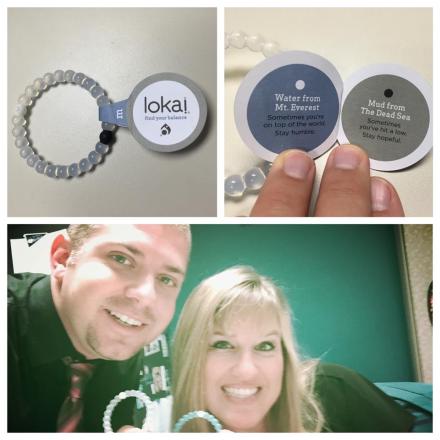
Me and Doctoral Candidate Christy Heaton (right)
Work on a research project with a faculty member.
Towards the end of my coursework, I was given an opportunity to work with a few faculty members on a research project with the long term goal of publication. It was one thing to learn about how to conduct a research study in class, but it is at a whole new level when you are actually out in the field. Working on this research project gave me the practical application of many of the theoretical constructs we studied in class. It also gave me a “practice run” of conducting a research study, from start to finish, before I had to conduct my dissertation study. The experience was invaluable and I would encourage you to reach out and do the same. If you are interested in checking it out, here is the APA citation:
Broadhurst, C., Martin, G., Hoffshire, M., & Takewell, W. (2016). “Bumpin’ up against people and their beliefs”: Narratives of student affairs administrators creating change for LGBTQ students in the South. Journal of Diversity in Higher Education.
I could go on forever about my experience. If you are reading this and would like to process about whether or not a doctoral program is for you or you need an extra push to make it through the last stage in the process, do not hesitate to drop a message. I’d love to continue to this conversation and more than happy to help.
Until next time!
 Mike Hoffshire